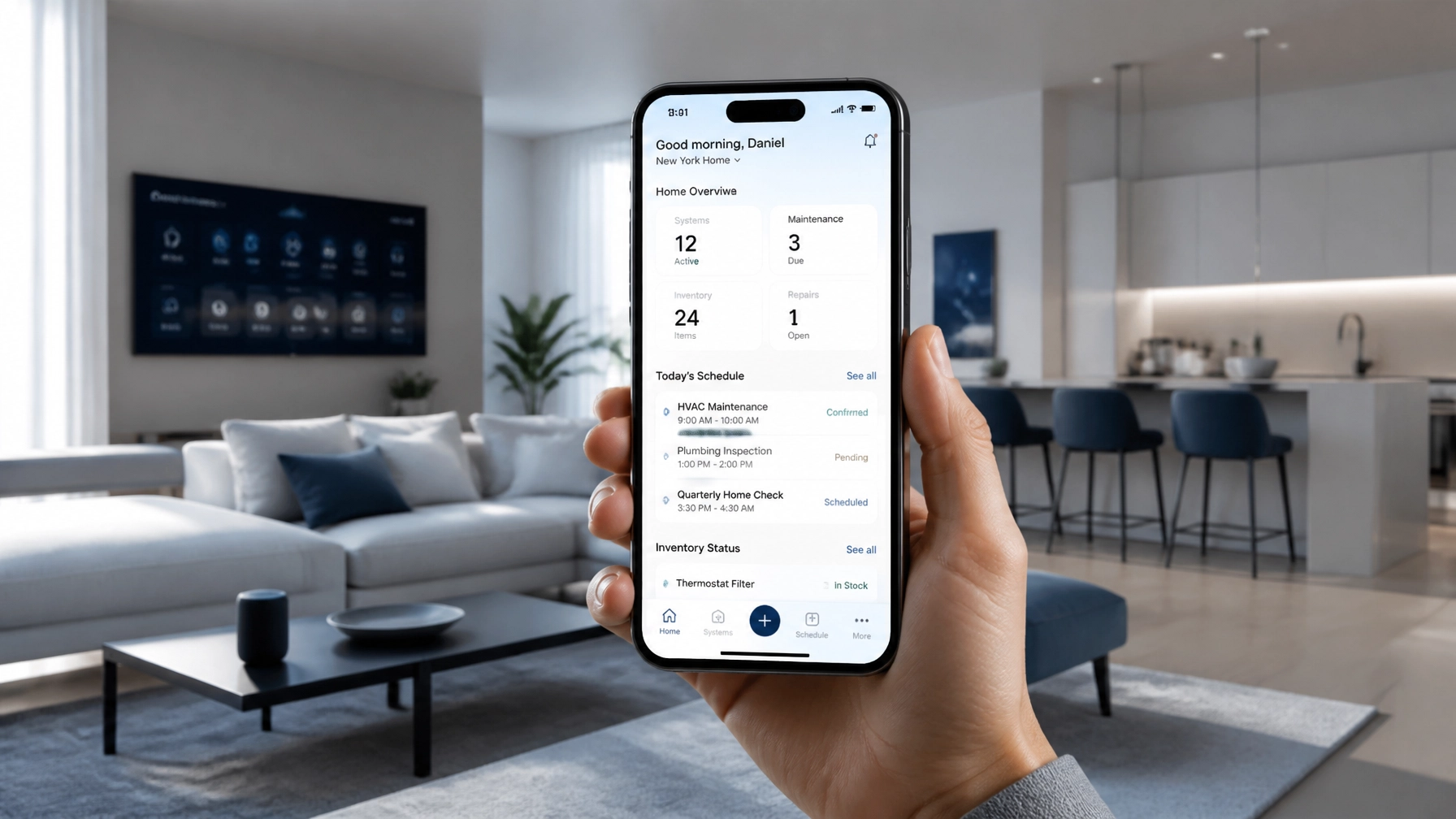

It’s Sunday evening. The sun is setting on another weekend, and you’re likely sitting on the couch, mentally scanning the house. You see the flickering lightbulb in the hallway, the stack of HVAC filters still in their plastic wrap, and that mysterious squeak in the floorboard that you promised you’d "take a look at" on Saturday morning.
If your home maintenance schedule feels more like a guilt-trip than a roadmap, you aren’t alone. Most homeowners start with the best intentions, but somewhere between Monday morning emails and Friday night exhaustion, the "to-do" list becomes a "wish-I-did" list.
As we close out this weekend and prep for a productive week ahead, let’s troubleshoot the friction points. Here are 10 reasons your home maintenance schedule is failing: and the high-tech, high-efficiency ways to fix it.
1. Your Schedule Is a Wishlist, Not a Plan
Most people treat home maintenance like a New Year's resolution. They write "clean the gutters" on a sticky note and stick it to the fridge. That isn't a plan; it’s a hope. Without a specific date, time, and frequency, that task has a 0% chance of getting done when life gets busy.
The Fix: Automate the Decision-Making
Stop relying on your memory. Move your tasks into a digital framework. Assign every task a frequency: monthly, quarterly, or annually. If it’s not on a calendar with a notification, it doesn’t exist. Using a Home Management SaaS allows you to set these once and let the AI remind you when it’s actually time to move.
2. You’re Ignoring the "Hidden" Systems
It’s easy to remember to mow the lawn because you see it every time you pull into the driveway. It’s much harder to remember to flush the sediment out of your water heater or check the attic for signs of pests. These "out of sight, out of mind" systems are the ones that lead to the $5,000 repair bills.
The Fix: Create a "Hidden Systems" Audit
Every Sunday evening, as part of your week prep, pick one hidden system to "Snap & Solve." Use your phone to take a quick photo of your water heater or HVAC unit. Modern AI diagnostics can often spot early signs of wear that the human eye misses.

3. No One Is Clearly Responsible
In a multi-person household, "someone" usually means "no one." You thought your partner was handling the smoke detector batteries; they thought you were calling the pest control guy. This ambiguity is where maintenance goes to die.
The Fix: Assign Ownership
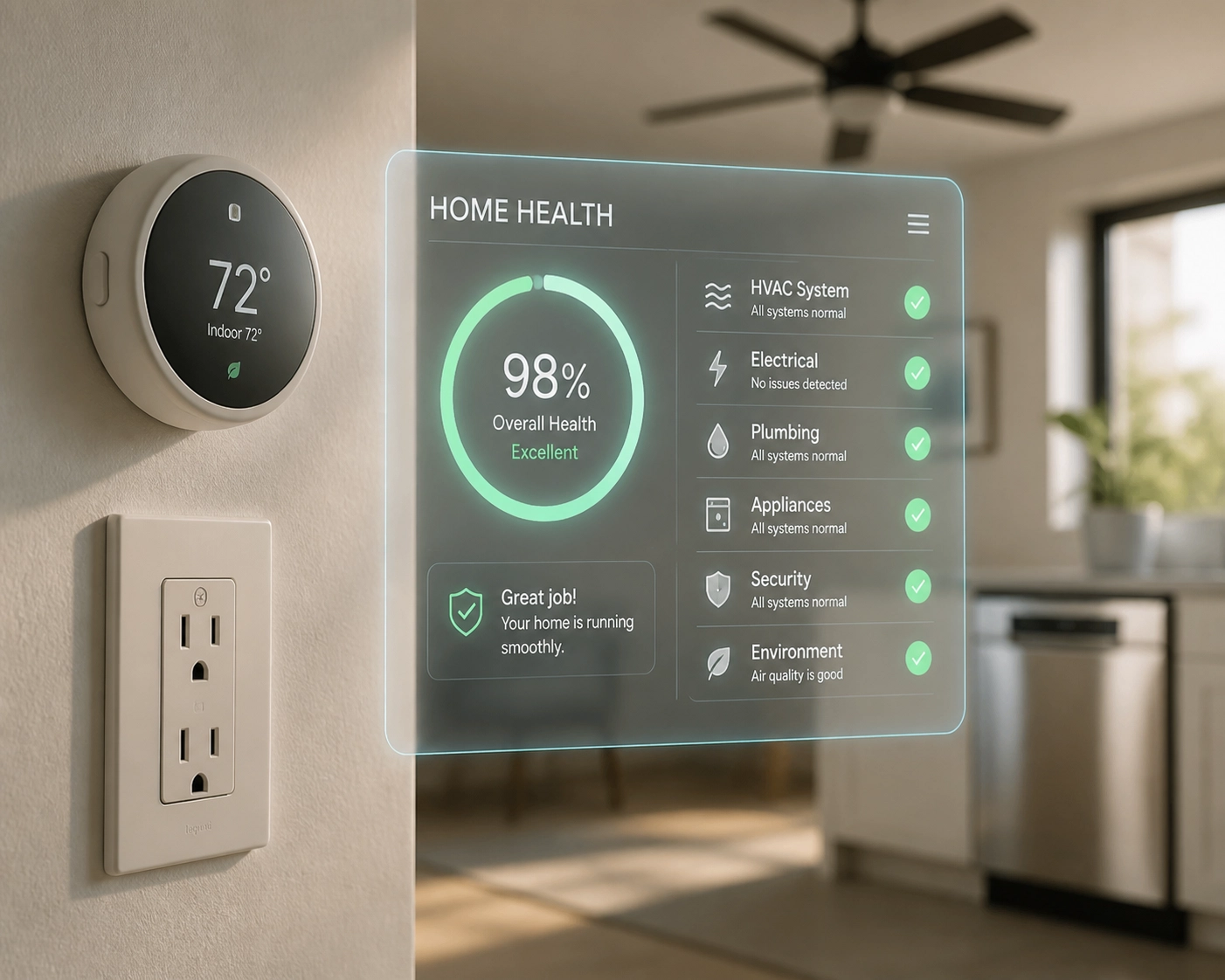
Use a shared platform to assign tasks. If you’re using TotalHome Hub, you can designate specific users for specific tasks. Make it a game: who can keep their "Home Health Score" the highest? Clear ownership leads to clear execution.
4. You’re Waiting for the "Big Break"
The most expensive way to maintain a home is to wait for something to stop working. Reactive maintenance is stressful, expensive, and always happens at 11:00 PM on a holiday weekend.
The Fix: Shift to a "Maintenance as Insurance" Mindset
Think of a $20 filter change as a way to protect a $10,000 HVAC system. During your Monday morning prep, look at your upcoming week. Do you have 15 minutes on Tuesday evening? Use that window for a proactive check. Small, consistent wins prevent massive, catastrophic failures.
5. You’re Underestimating the Power of Water
Water is the silent killer of home equity. A tiny drip under the kitchen sink or a slightly clogged gutter can lead to mold, rot, and foundation issues that take months to fix. Most schedules fail because they don't prioritize water-related checks high enough.
The Fix: The 5-Minute Sunday Leak Walk
Before you finish your weekend closeout, do a "wet walk." Check under every sink, look at the base of your toilets, and glance at the ceiling for spots. It takes five minutes and can save you five figures.
6. You’re Rushing the Prep Work
DIY maintenance often fails because we try to squeeze a three-hour job into a one-hour window. You skip the cleaning, the priming, or the tool-gathering, and the result is a "fix" that breaks again in two weeks.
The Fix: Build "Buffer Time" into Your Schedule
When you plan your weekend tasks, always add a 20% time buffer for prep and cleanup. If you don't have time to do it right, you definitely don't have time to do it twice.
7. You’re Buying the Cheapest Materials
It’s tempting to grab the $2 furnace filter or the bargain-bin caulk. But low-quality materials require more frequent replacement, actually increasing your workload over time.
The Fix: The "Buy Once, Cry Once" Rule
Invest in high-quality components. Use a digital home inventory to track which brands and models you’re using. When you see that a high-quality filter lasted longer and kept your air cleaner, the ROI becomes obvious.

8. Your Schedule Ignores the Seasons
Trying to fix exterior paint in the humid mid-summer or cleaning gutters during a winter freeze is a recipe for frustration. A generic checklist doesn't account for the reality of your local climate.
The Fix: Use a Seasonal Framework
Divide your year into quarters.
- Spring: Focus on the exterior and water diversion.
- Summer: Focus on cooling systems and energy efficiency.
- Fall: Focus on sealing the envelope and heating prep.
- Winter: Focus on indoor air quality and safety systems.

9. You Don’t Have an Emergency "Playbook"
When a pipe bursts, you don't want to be searching for the main water shutoff valve in the dark. Most schedules focus on the "doing" but forget the "knowing."
The Fix: Map Your Home’s Vitals
This Monday, spend 10 minutes locating and labeling your main water shutoff, the gas valve, and your electrical panel. Take a photo of them and upload them to your TotalHome Hub support portal. Having this info at your fingertips converts a potential disaster into a minor inconvenience.
10. You Aren’t Tracking Your Progress (The Data Problem)
If you don't track it, you can't improve it. Most homeowners have no idea how old their appliances are, when the last service was, or what their "Home Health Score" actually is. This lack of data makes maintenance feel like a chore rather than a strategy.
The Fix: Build a Digital Home Inventory
This is the game-changer. A digital home inventory isn't just for insurance; it’s the brain of your home. By documenting every outlet, ceiling fan, and appliance, you create a data set that powers smart reminders.
- Track Age: Know exactly when your water heater is entering the "danger zone."
- Monitor Condition: Note that a fan is starting to wobble before it falls.
- Maintenance History: See exactly when you last tested those GFCI outlets.
Resetting for a Productive Week
As you wrap up your weekend, don’t look at your home as a list of problems. Look at it as an asset that needs a manager. You are the CEO of your household, and every CEO needs a dashboard.
If your current paper list or mental notes aren't cutting it, it’s time to upgrade. A structured, AI-driven approach to home management doesn't just save your house: it saves your weekend.
Ready to stop guessing and start managing?
Explore the TotalHome Hub Maintenance Demo and see how a digital inventory can transform your "wishlist" into a high-performance plan.
Tomorrow is Monday. Start the week with a home that works for you, not the other way around.
For more tips on mastering your domain, check out our Privacy Policy to see how we keep your home data secure.